Education is political – it's time we talked about it
The world has greatly improved access to education, but quality has proved more difficult. Political economy analysis can help.
Kenechukwu Nwagbo | 3 August 2026
Note: This article was first published on Re Education on 28 July 2026. It was reprinted by permission from Re Education and the author.
Background
Access to basic education is one of the greatest political success stories of the last three decades. Quality has been a harder hill to climb. Does politics explain why? I believe so and I think PEA is a strategy that can help educators.
Between 2007 and 2015, there were 43 million fewer children out of school, and since the SDGs were adopted another 110 million have enrolled. This has been driven by strong political coalitions of governments, donors, practitioners and civil society organisations that have prioritised education, mobilised resources and sustained commitment. Education for All, the MDGs and the SDGs made schooling a global priority.
But, progress has stalled: since 2015, out‑of‑school numbers have fallen by only 3 million, and over 200 million children remain excluded. The real challenge has shifted from access to learning. In 2018 the World Bank declared a “learning crisis” and recent figures estimate 70% of 10‑year‑olds in low‑ and middle‑income countries unable to read a simple text.
Easy access, hard quality
Expanding access meant building schools, abolishing school fees, recruiting teachers and increasing enrolment. These were tangible achievements that governments could quantify, voters could see, and communities could immediately benefit from. New schools created construction contracts, generated employment and demonstrated visible investment in neglected areas. Fee abolition removed one of the biggest barriers preventing children from attending school. Rising enrolment numbers became powerful indicators of political commitment and progress.
Improving quality has proved much harder. Quality is far less visible, requires continuous investment and is far more dependent on a functional education system. It requires teachers to be recruited on merit, paid on time and supported to improve their practice. It also requires reliable learning assessments, effective school leadership, and strong monitoring and accountability systems. These are not one-off investments but continuous governance interventions. Their political returns are often slower, less visible and more difficult to attribute to a single administration than opening a new school or announcing free education.
If the politics of access defined the previous generation of education reform, then the politics of learning should help define the next. Fortunately, this is no longer a neglected area of research in the field of education and international development.
The politics of learning
As countries have struggled to convert schooling into learning, political economy analysis has become an increasingly important lens for understanding what is holding these reforms back. For example, in 2018, the World Bank acknowledged that countries must overcome both technical and political barriers to improve learning outcomes by building coalitions, aligning with the interests of important actors and taking an adaptive approach to facilitate change.
These ideas did not emerge in isolation. They build on a longer tradition of scholarship that has examined education reform through a political economy lens. Together, this emerging body of work has shown how power, formal and informal institutions, incentives and coalitions shape whether reforms succeed, stall or fail, and have proposed ways of working with, rather than around, these political realities.
The politics of education is not new. Practitioners have been navigating it for decades, through stakeholder engagement for example. The newness is the growing body of research that helps us to systematically capture, analyse and integrate these political realities in our approach to education reform.
Yet, despite these advancements, politics is often left unspoken in decision-making rooms and rarely discussed openly in policy and practice. Why ?
Why are educators so shy of politics?
This has created a disconnect in what we know and what we do. Educators know politics matters, yet they rarely talk about it openly.
Ask almost any funder, practitioner or policymaker whether education reform is political and they will acknowledge the truth of it. Budgets are political. Teacher recruitment is political. Curriculum reform is political. Decentralisation is political. Education financing is political.
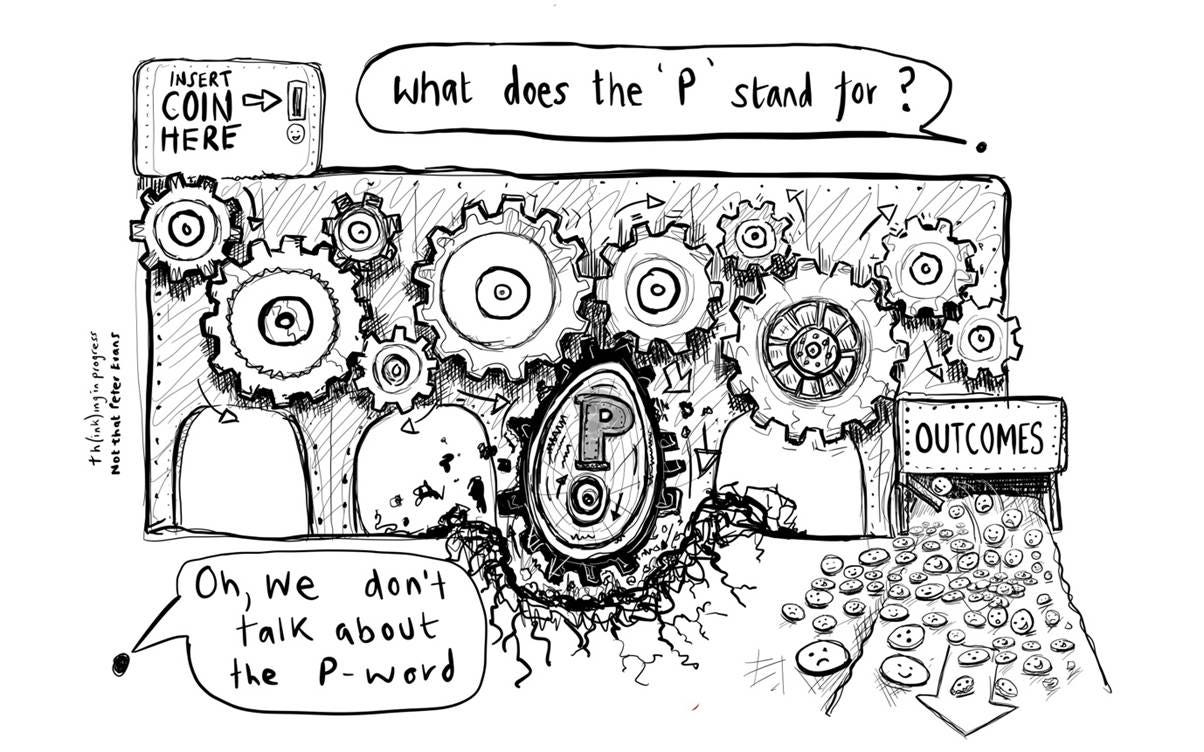
Yet, the moment the conversation turns to politics, many of us become uncomfortable. Not because we deny its importance, but because we worry about how to talk about it and the consequences of talking about it. This instinct is understandable: we want to maintain trusted relationships with governments, preserve access, reassure donors, and stay in the good graces of the very people we need to work with. There is safety in seeing education reform as a purely technical exercise, but, too often it means we replace “politics” with softer language, substituting it with words like “context” or “institutional analysis” and avoiding the P-word altogether.
Avoiding politics, namely, the power dynamics, incentive structures, institutions (or lack thereof) that shape education systems, means we ignore its consequences, and the role of politics in preventing us from improving learning outcomes, specifically.
A couple of years ago this conviction led me to bring together like-minded colleagues to establish the Politics of Education (POLED) Network at the University of Cambridge. As doctoral researchers, we believed there should be a space where researchers, practitioners and policymakers could simply talk about the role of politics in education, and especially how it affected the low and middle-income countries we worked in.
The Open PEA approach
So, joining the Open Political Economy Analysis (Open PEA) programme at the University of Oxford felt like the natural next step after my doctoral studies.
If POLED was about creating space for conversations about politics, Open PEA is about integrating these conversations within policy and practice.
Our goal is simple: to make political economy analysis accessible and actionable. To do this, we translate complex research into practical insights that help policymakers, practitioners and the general public to understand how power, interests and incentives shape the systemic challenges that they are trying to change. We do this using a simple five-part template to :
- lay out the problem
- identify the players
- show the rules of the game
- describe the state of play and
- offer practical policy propositions in plain, accessible language
Open PEA writing bootcamps
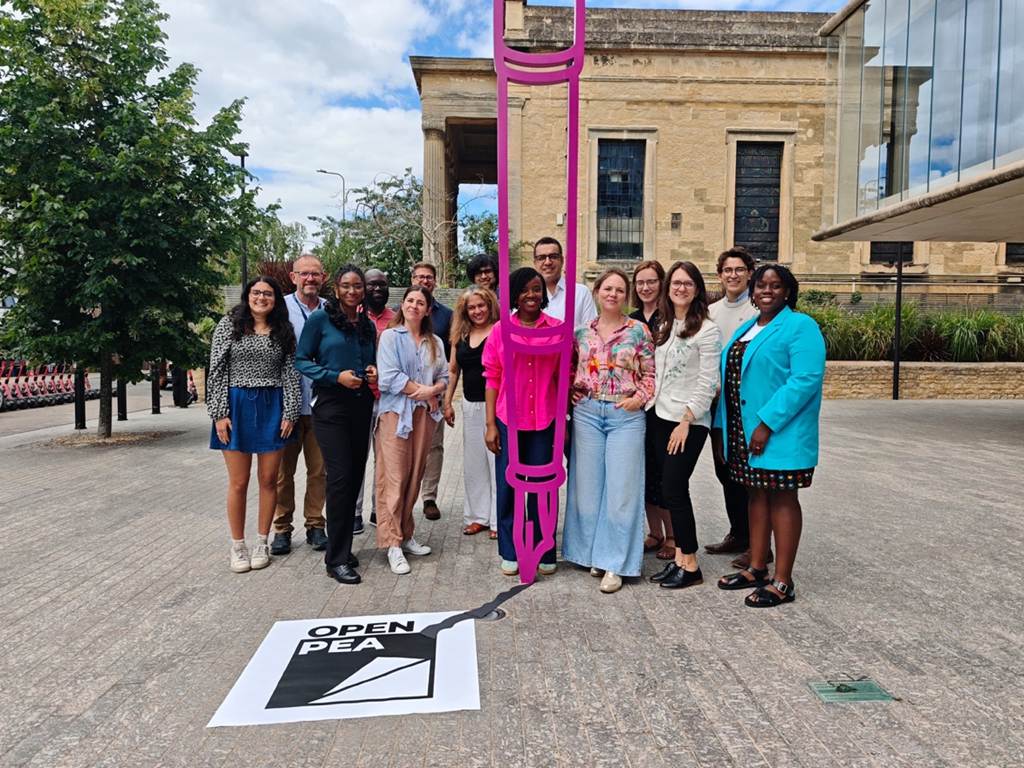
One of our key objectives is to help practitioners use political economy analysis not just as an academic exercise, but as a practical way of designing, implementing, and thinking about reforms. To help realise this goal, in July, we hosted our first ever writing bootcamp, bringing together education researchers, policy experts/practitioners and funders to do something that rarely happens: work side by side to translate political economy research into plain-language policy products. Using Open PEA’s five-step framework, participants left not just with new ideas, but with practical outputs designed to respond to real-world challenges.
One researcher commented :
[I learned] how to think differently about a problem I thought I had a very good grasp on (given that it was my PhD thesis) and how complicated thinking and discussing politics really is (even when you think you have it figured out).
Another said :
Thinking and doing politics is hard! It’s why so many people avoid it and why these conversations are important.
I travelled to Nairobi a few weeks later on the invitation of the International Education Funders Group (IEFG) to deliver a similar training session for their network of education philanthropy donors operating in Kenya. We applied Open PEA’s approach to address a real challenge they faced: co-ordination.
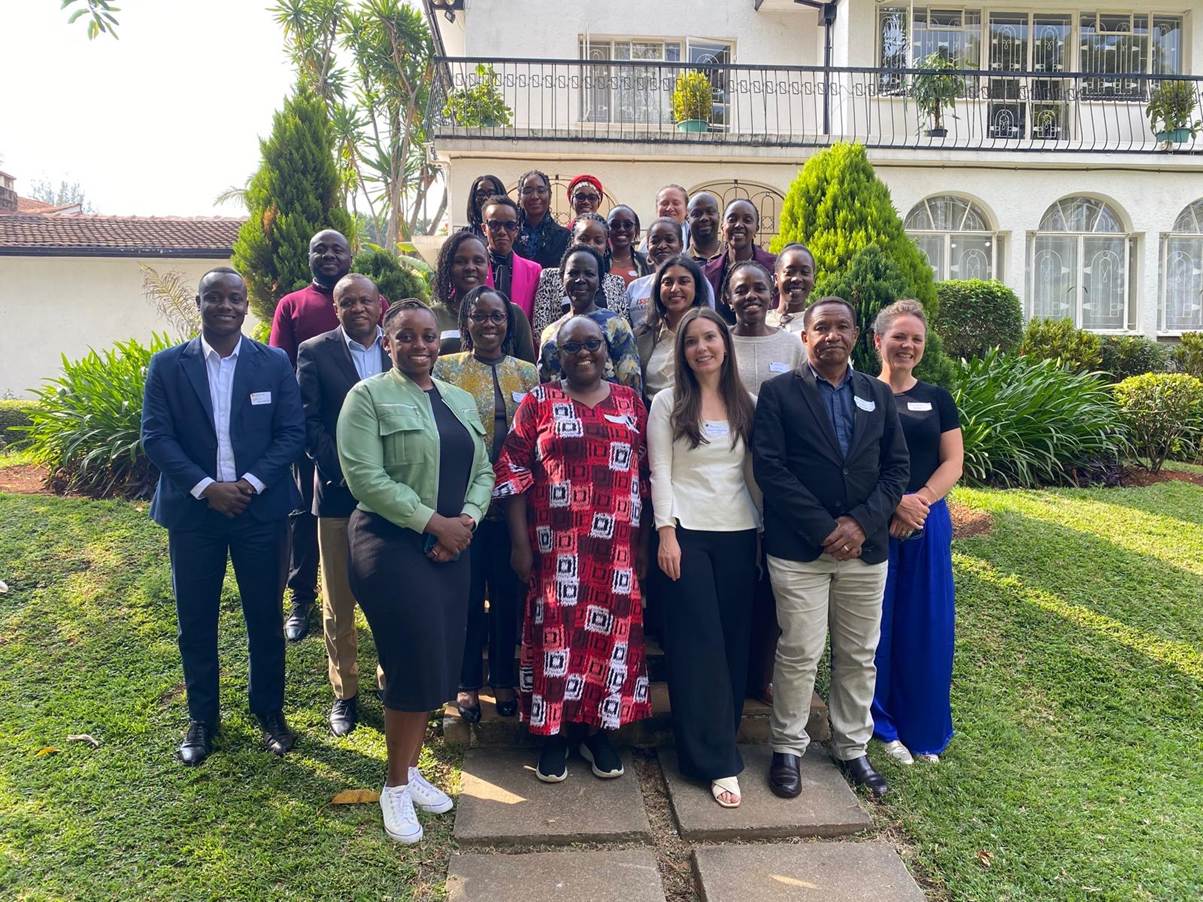
Again, our approach gained real support and positive feedback with one participant reflecting that:
Often times our sector treats politics as something to avoid or confront. This session reminded me that politics is an inevitable reality that we must engage with if we’re to have the impact that we desire.
What’s Next?
Basic education is experiencing a shift in its political and financial landscape. The COVID-19 pandemic has reversed years of progress and deepened the global learning crisis, governments have less fiscal space, and many international donors have radically reduced their aid budgets. If education systems are expected to deliver more with less, understanding how those systems really work is now more important than ever.
But, the politics that made access possible are not necessarily the politics that will improve learning. Researchers at our bootcamps pointed out that facilitating the integration of refugees into Kenya education systems education in Kenya involves a different set of actors, incentives and institutions than improving education quality in Nigeria, or strengthening outcomes-based financing in Ghana, or addressing barriers to the political saliency of quality education in Bangladesh.
Every stubborn problem has its own politics, which is why every Open PEA begins with understanding the problem before proposing solutions.
The political economy analysis of education that Open PEA is supporting can help policymakers and practitioners understand not just what the problem is, but why it persists and what can realistically be done about it. Developing these ideas into high-quality products, takes collaboration, time and funding. But, once published, they become public goods that educators can use, adapt and build into their own work.
If Open PEA's mission resonates with you, get in touch at open.pea@bsg.ox.ac.uk.
There are three ways you can help.
Fund new Open PEAs (including training sessions) so we can continue developing practical, open-access analyses of the enduring problems holding education systems back.
Use our products in your own work and encourage others to do the same.
Share them widely to help put politics on the table in education policy and practice.